weGetCookies Enterprise
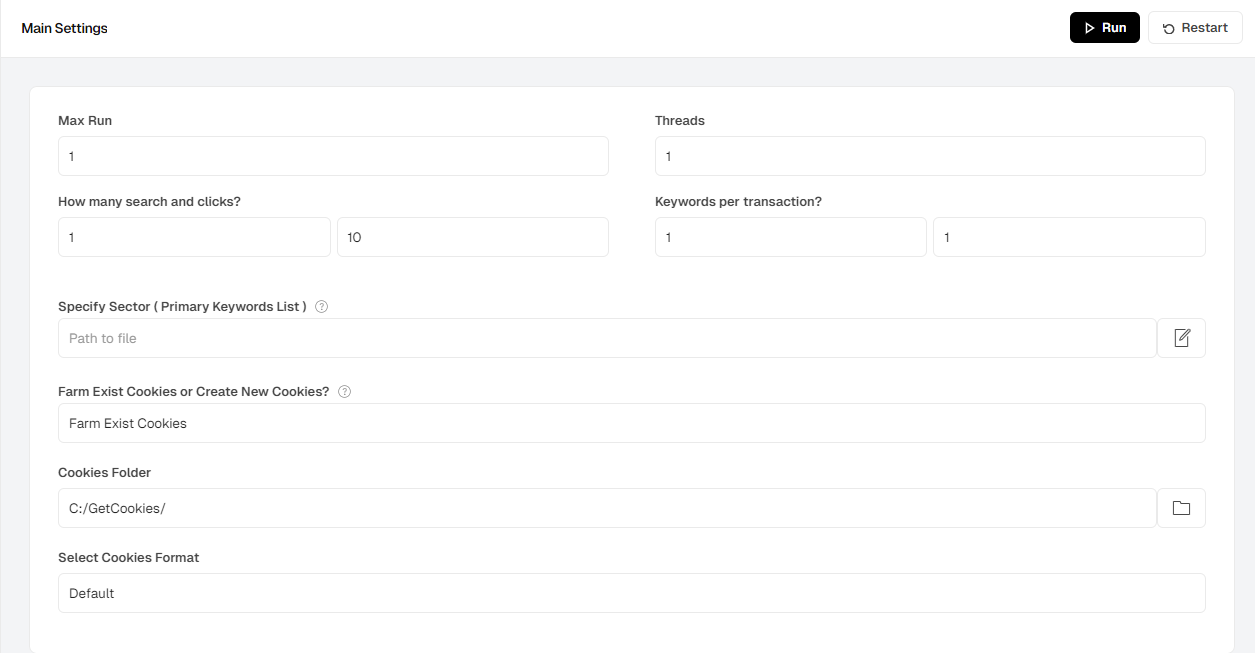
- Main Settings (Core Configuration) The primary dashboard where you define the cookie farming and profiling strategies for weGetCookies Enterprise.
-
Number of Operations to Perform: The primary parameter dictating the total number of distinct cookie profiles the automation will process.
-
Concurrent Browser Threads: Determines the number of browsers running simultaneously (multi-thread), strictly dependent on your system resources (CPU/RAM).
-
How many Searches and Clicks (min, max)?: Defines the tolerance range for organic searches and clicks the bot will perform on target platforms. Random values are selected between these parameters to simulate authentic user behavior.
-
Keywords per Operation: Indicates the number of keywords to be utilized during a single cookie creation or warm-up session.
-
Specify Sector / Keyword List (AI): The directory path to the .txt file containing the seed keywords. This AI-integrated list dictates the specific audience persona (e.g., E-commerce, Finance, Healthcare) the generated cookie will emulate based on its search history.
-
Farm Exist Cookies or Create New?: The critical field for determining your cookie farming strategy:
-
Farm Exist Cookies: Ingests existing cookie profiles and navigates them through search engines to "warm them up," significantly boosting their Trust Score.
-
Create New Cookies: Generates entirely new browser profiles and fresh cookies from scratch.
-
Mix: A hybrid approach that generates new profiles while simultaneously strengthening existing ones.
-
Cookie Folder: The master directory (e.g., C://GetCookies/) on your local machine or server where the generated or warmed-up cookie data files will be securely saved.
-
Select Cookie Format: Determines the export format of the harvested data, ensuring seamless cross-platform compatibility:
-
Default: weGetCookies' standard proprietary export format.
-
Netscape: The industry-standard Netscape cookie format (highly recommended for weMail and weSeo integration).
-
J2Team: A specialized format compatible with J2Team extensions and specific automations.
-
EditThisCookies Extension: JSON format tailored for direct import via the popular EditThisCookies browser extension.
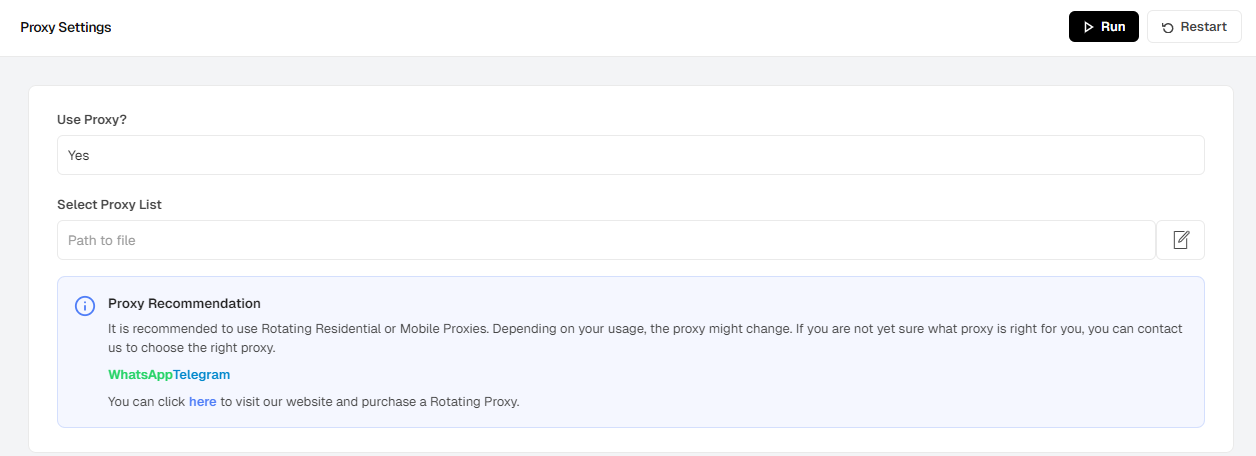
2. Proxy Settings The module dedicated to IP management and footprint concealment operations.
-
Use Proxy?: The master toggle that dictates whether a proxy network will be utilized during the cookie generation processes.
-
Select Proxy List: The file path defining where the system will fetch the list of proxy IP addresses (IP:Port:User:Pass).
-
Corporate Recommendation Note: To maximize the Trust Score and eliminate ban risks, utilizing WE1TOWN Rotating Residential or Mobile Proxy infrastructures is highly recommended.
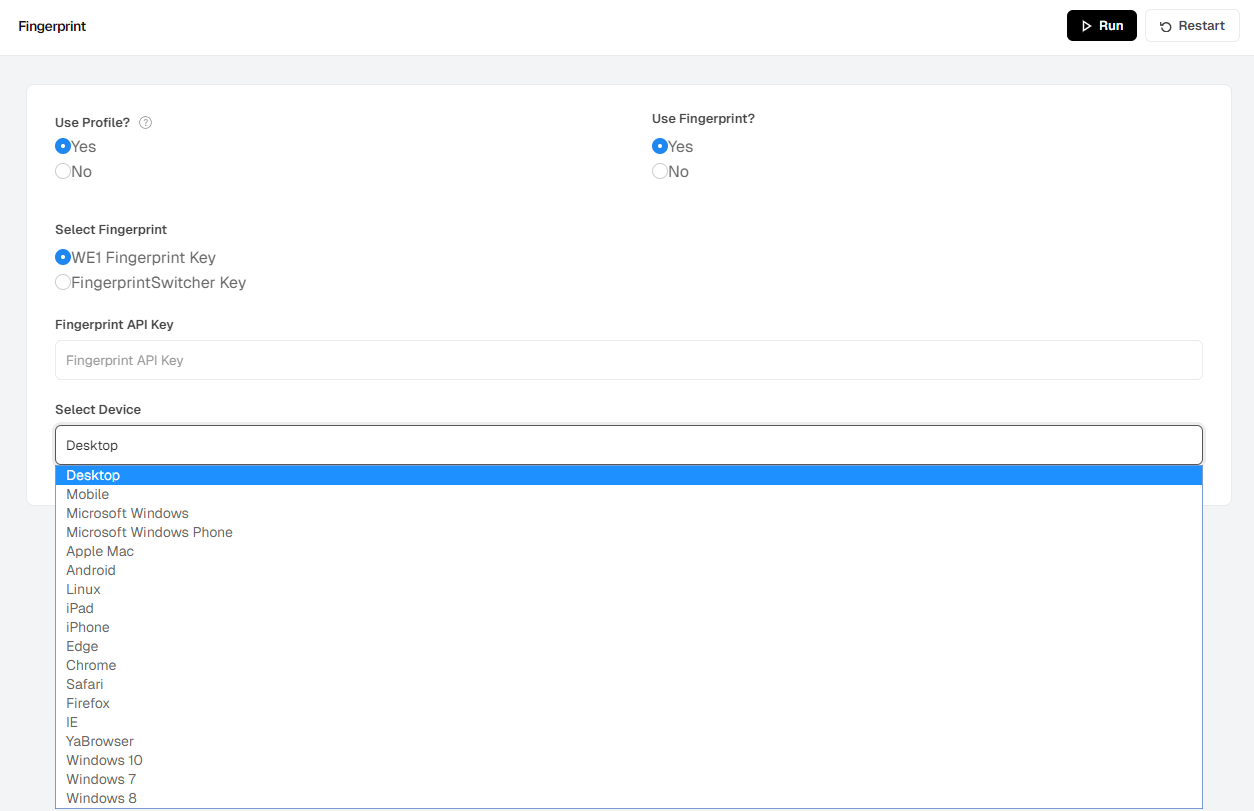
3. Fingerprint Settings The advanced security module powered by the weBrowser infrastructure, assigning a unique hardware identity to every profile.
-
Use Profile?: Enables the retention of browser session data (history, local storage), saving it as a persistent, reusable persona.
-
Use Fingerprint?: The security toggle that activates device fingerprint manipulation (Canvas, WebGL, User-Agent masking).
-
Select Fingerprint Type: Designates the fingerprint infrastructure to be deployed:
-
WE1 Fingerprint Key: WE1TOWN's proprietary, high-speed, and robust in-house fingerprint pool.
-
FingerprintSwitcher Key: Utilization of the third-party FingerprintSwitcher infrastructure.
-
Fingerprint API Key: The input field for the API authentication token corresponding to your selected service.
-
Select Device: A comprehensive hardware-level configuration defining the specific architecture the cookie profile will emulate (e.g., Desktop, Mobile, specific OS like Windows/Mac/Android, and target browsers).
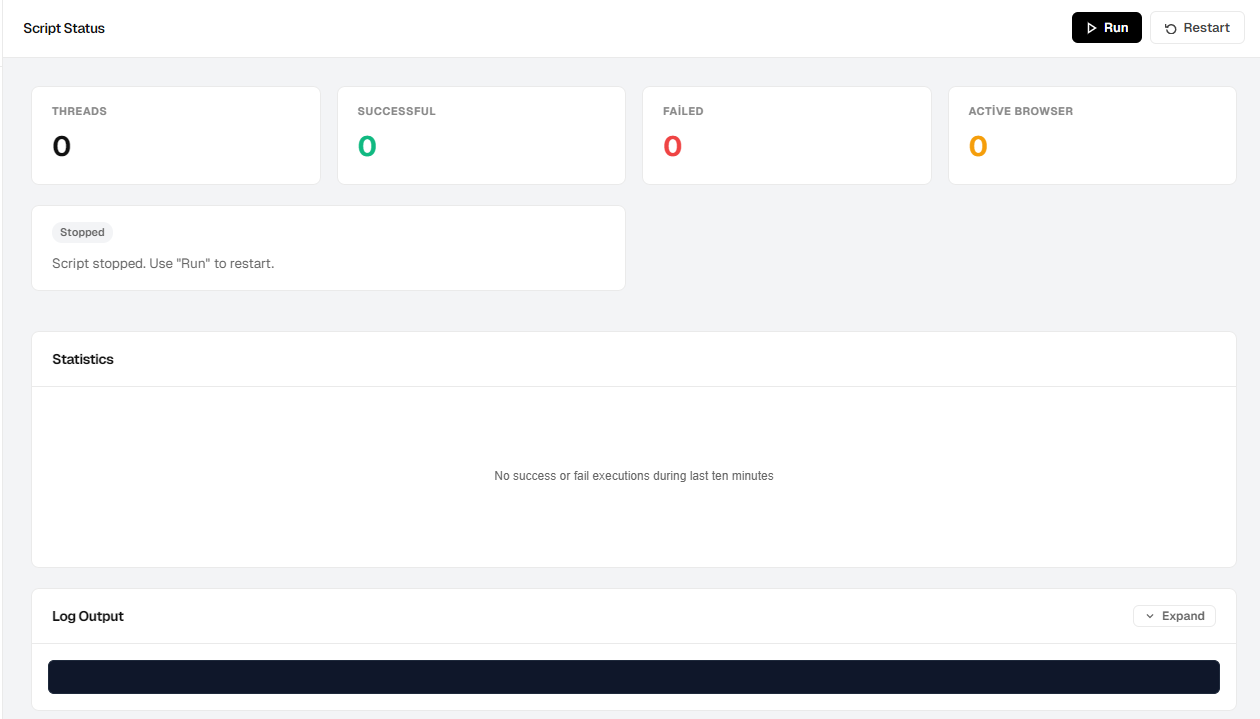
4. Operation Status (Live Monitoring Dashboard) The centralized management console for real-time operational oversight.
-
THREAD / ACTIVE BROWSER: Displays the total number of active worker threads and currently open virtual browser windows operating in the background.
-
SUCCESSFUL / FAILED: The live tally of successfully generated/warmed-up cookies versus failed operations (due to proxy drops, timeouts, etc.).
-
Statistics & Log Output: The developer console displaying periodic performance graphs and second-by-second chronological logs of all background processes.

 Turkey (Türkçe)

